Operations · Business Systems · Product Strategy

Your business is growing. Your operation needs to keep up.

I find the constraint across people, process, systems, or technology, and build what the business needs to keep moving forward.

Amanda Diaz at her desk

Impact at scale

business growth supported
~100Kleads routed weekly
9,000+platform users
2,000+agents supported
$20M+issued paid premium tracked
business growth supported
~100Kleads routed weekly
9,000+platform users
2,000+agents supported
$20M+issued paid premium tracked

How I work

Find the constraint. Fix it. Then find the next one.

Growth creates constraints, a process, a person, a system, a decision that can't keep up. Fixing everything at once only adds complexity, so the work starts with the constraint creating the most drag.

  1. 1

    Identify

    Find what's actually limiting the business.

  2. 2

    Understand

    Map the people, process, and systems around it.

  3. 3

    Solve

    Design the right fix for the actual problem.

  4. 4

    Prove

    Validate it in the real operation.

  5. 5

    Scale

    Document it, train the team, build it in.

  6. 6

    Repeat

    Solving one bottleneck reveals the next.

Where I come in

Different stage. Different constraint.

01

Already scaling

Growing faster than the operation underneath it.

02

Starting from zero

An idea and a deadline, no operating structure yet.

03

Outgrown your systems

The tools exist, but the operation evolved past them.

04

Missing ownership

The problem crosses departments and nobody owns it.

Wherever the constraint lives, that's the starting point.

Selected work

Four business problems. Four very different systems.

Certain workflows, interfaces, data, and implementation details are excluded to respect confidentiality agreements.

Case 01

Lead Marketplace & Ordering System
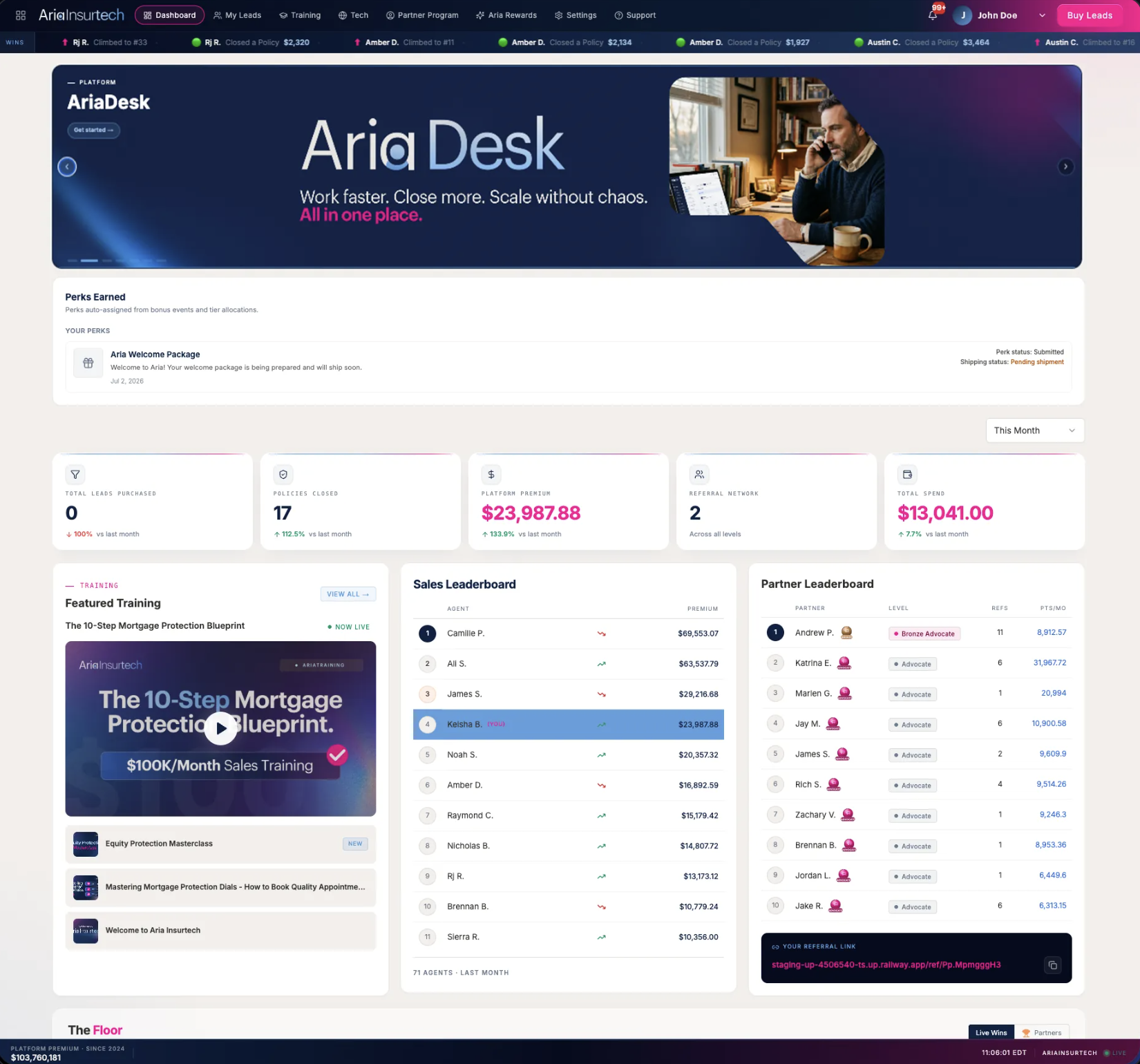
Lead marketplace dashboard

What it is

A lead marketplace and ordering system that allows independent insurance agents to purchase leads, manage orders, and move from payment through fulfillment within one connected environment.

The constraint

Growth was increasing the amount of manual coordination required between ordering, payment, fulfillment, and lead distribution. The operation needed to support significantly more volume without increasing operational complexity at the same rate.

What changed

Three disconnected handoffs became one continuous workflow, with purchasing, payment, fulfillment, and lead routing connected through the platform.

My role

Operating model · Workflow architecture · Product strategy · Business requirements · Development direction · Systems integration · Validation · Rollout

Result

3× business growth supported

~100K leads routed weekly · 9,000+ platform users
Case 02

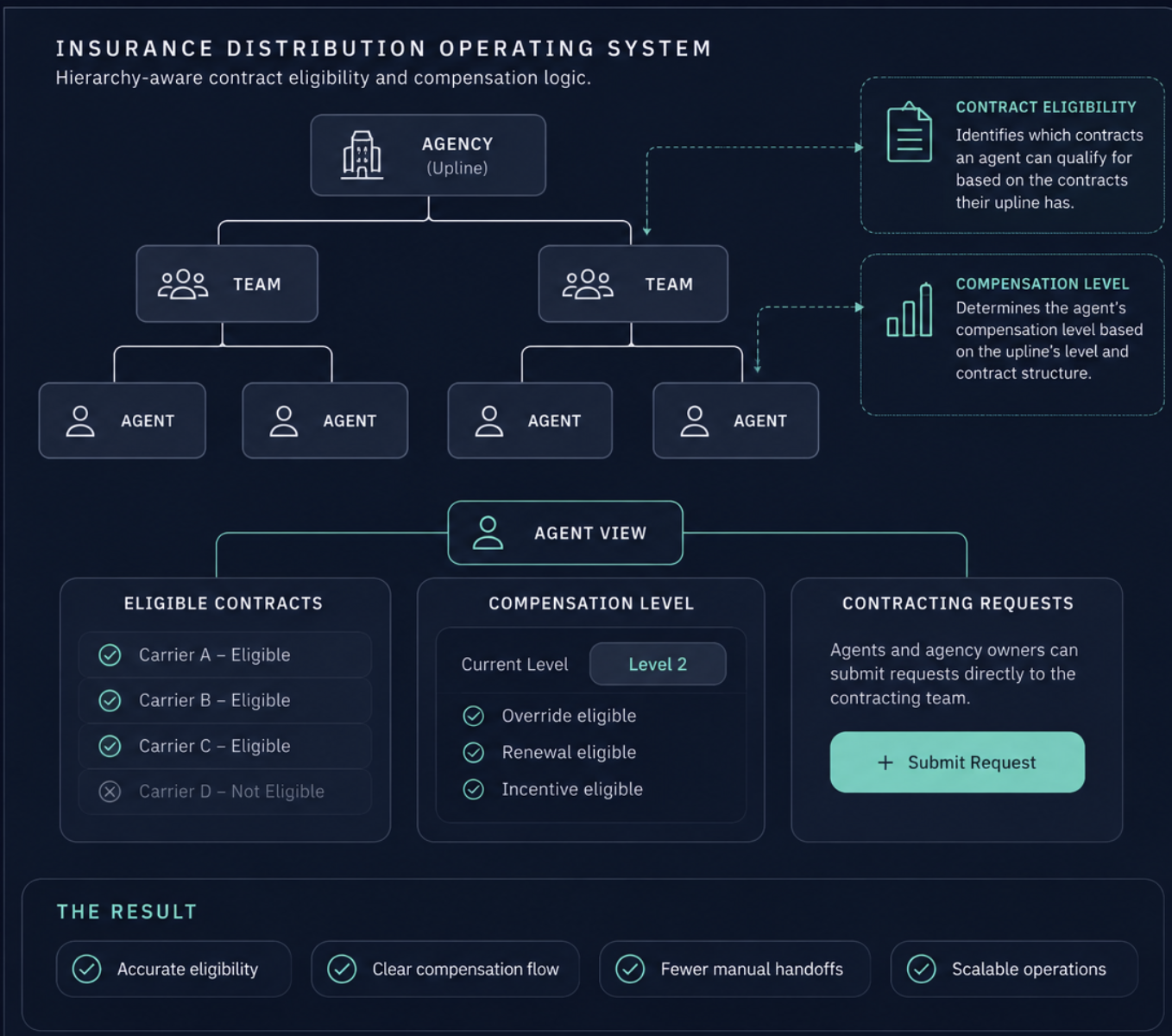
Agency Hierarchy & Compensation System

Insurance distribution hierarchy and compensation system diagram

What it is

A business system that mirrors the real structure of an insurance distribution organization. Connecting agents, teams, agencies, contracts, reporting relationships, and compensation logic.

The constraint

Compensation couldn't be treated as a simple transaction. A single policy can involve multiple organizational levels, contracts, overrides, renewals, and downstream relationships. At scale, those relationships create an operating model too complex to manage reliably through disconnected processes.

What changed

The organizational hierarchy was translated into system logic capable of understanding where agents and agencies sit, how those entities relate to one another, and how compensation should flow through those relationships.

My role

Business architecture · Organizational modeling · Compensation logic · Product requirements · Development direction · Testing · Operational implementation

Result

24 agencies. 2,000+ agents. One operating model.

Compensation logic supported across multiple levels of the distribution hierarchy.

Case 03

Underwriting Decision-Support System

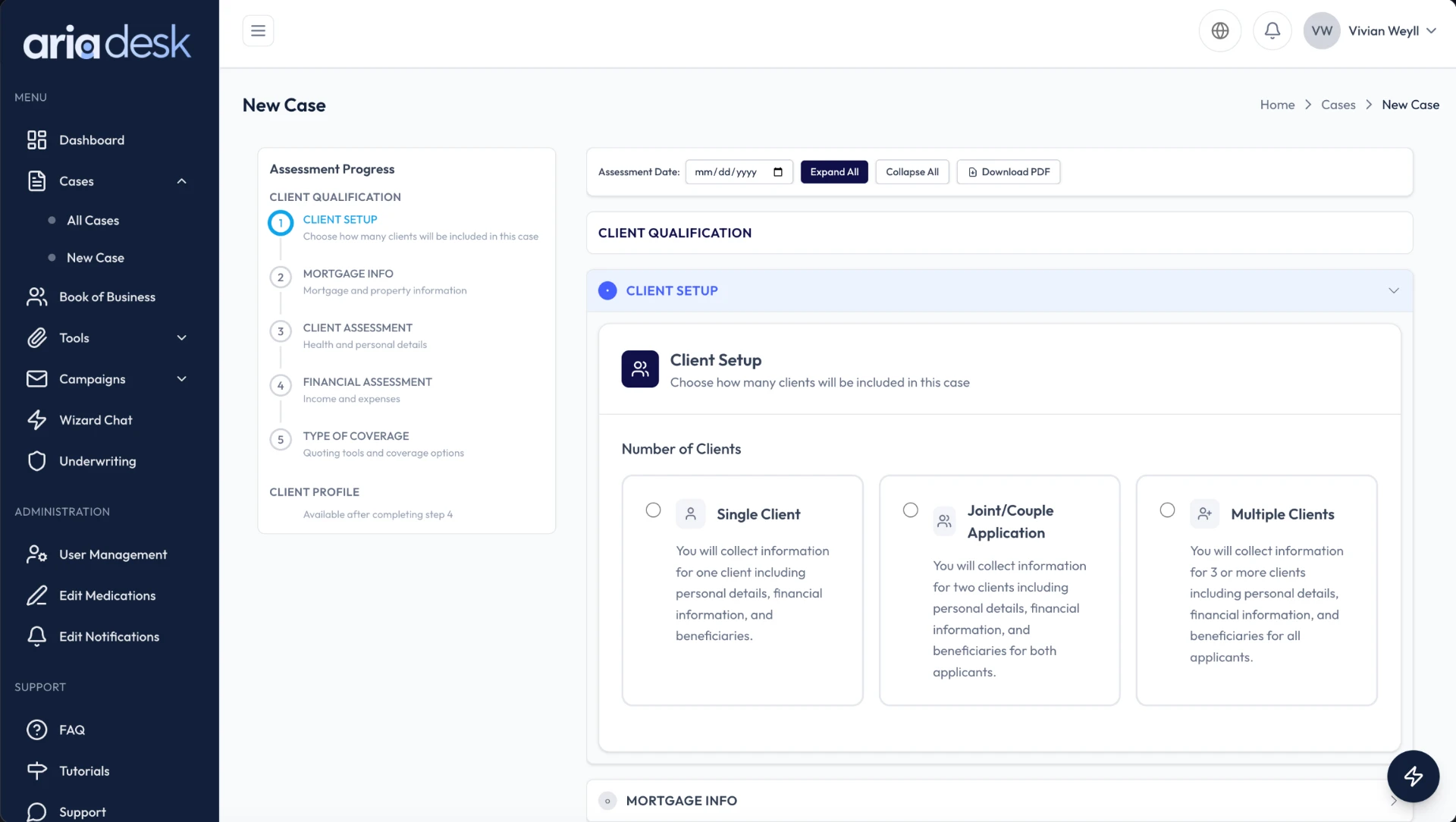
Guided underwriting decision workflow interface

What it is

A guided underwriting system that translates complex carrier and product requirements into a structured decision workflow for insurance agents.

The constraint

Underwriting expertise often lives with experienced people. Agents have to interpret different carrier rules, product requirements, client conditions, and case details before determining where a client may qualify. That makes expertise difficult to scale and creates unnecessary dependency on human intervention for repeatable decisions.

What changed

The underwriting process was mapped into structured decision logic that guides agents through relevant questions and requirements, helping them navigate available carrier and product options more consistently. Instead of requiring agents to know every rule before beginning, the system brings the relevant knowledge into the workflow where the decision is being made.

My role

Process architecture · Decision logic · Business requirements · Product strategy · Workflow design · Development direction · Validation

Scope

12 carrier integrations

31 products represented in decision logic.

Case 04

Performance & Agent Enablement System

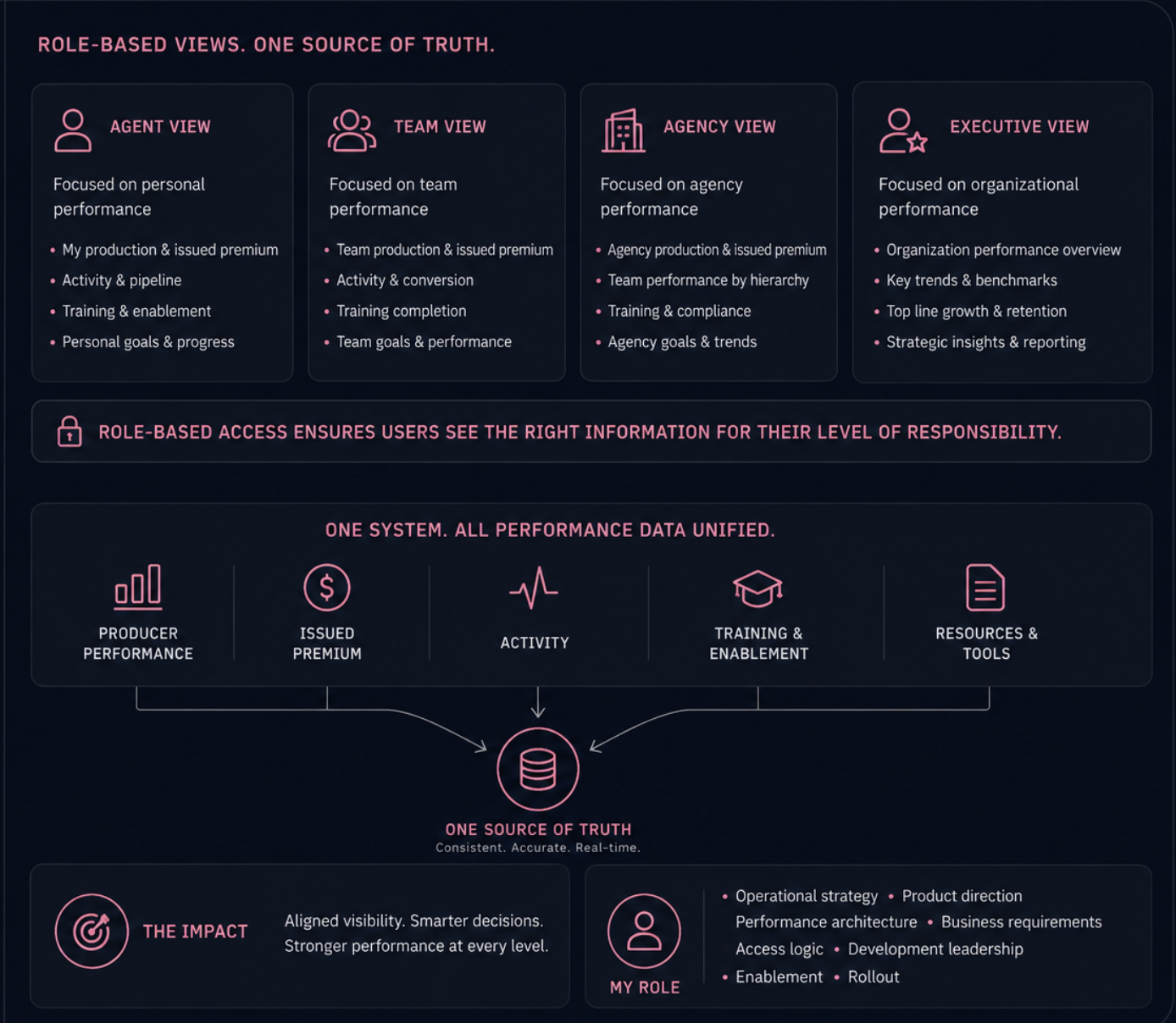
Performance and agent enablement system diagram

What it is

An operating environment connecting agent performance, training, issued premium, activity, and enablement resources with visibility determined by each user's role in the organization.

The constraint

Performance information lived across different systems and processes. Agents needed visibility into their own performance. Leadership needed visibility across teams and organizations. Both needed to work from consistent information without exposing data outside the appropriate level of access.

What changed

Performance, issued business, training, activity, and enablement resources were brought into one system with role-based access. Individual producers and different levels of leadership could see the information relevant to their scope of responsibility while operating from the same underlying system.

My role

Operational strategy · Product direction · Performance architecture · Business requirements · Access logic · Development leadership · Enablement · Rollout

Result

$20M+ in issued paid premium tracked

Role-based visibility across multiple levels of the organization.

Rollout

A system nobody uses isn't a system.

Roadmaps, enablement, and operating results, presented to the people who have to act on them.

Not just built. Given the room to adopt it.

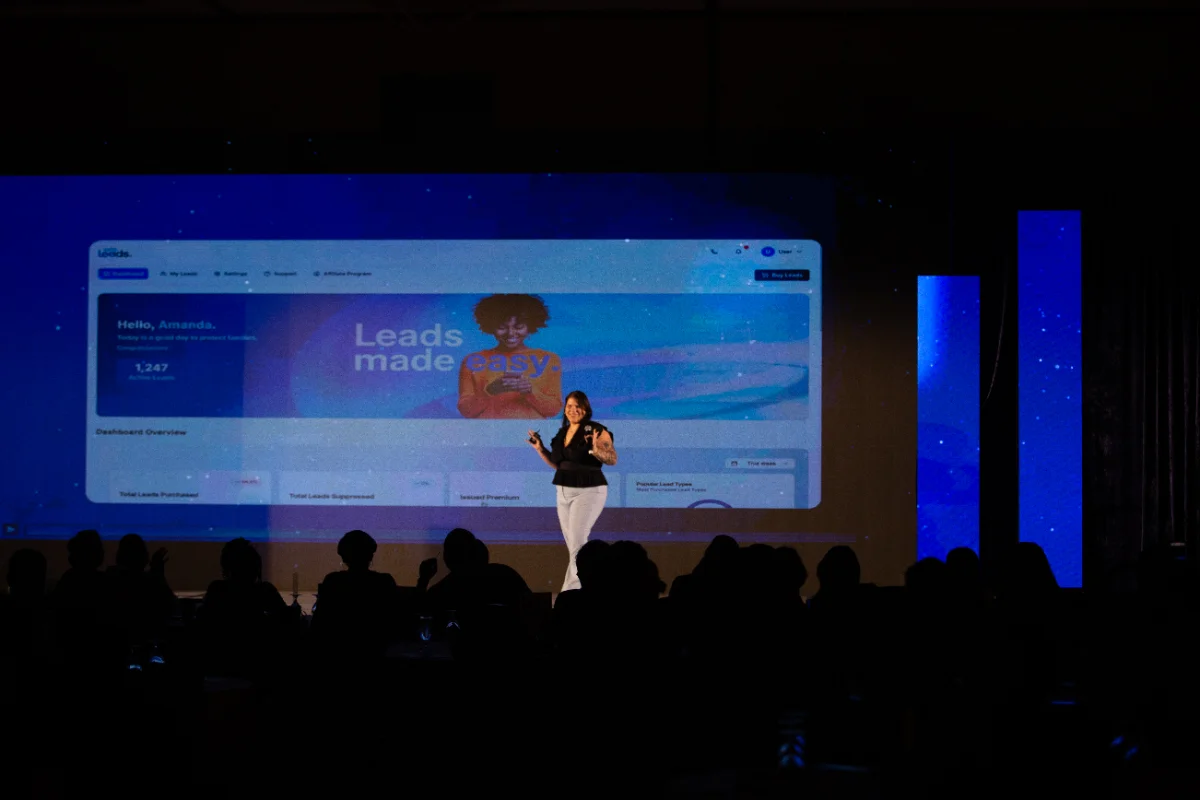
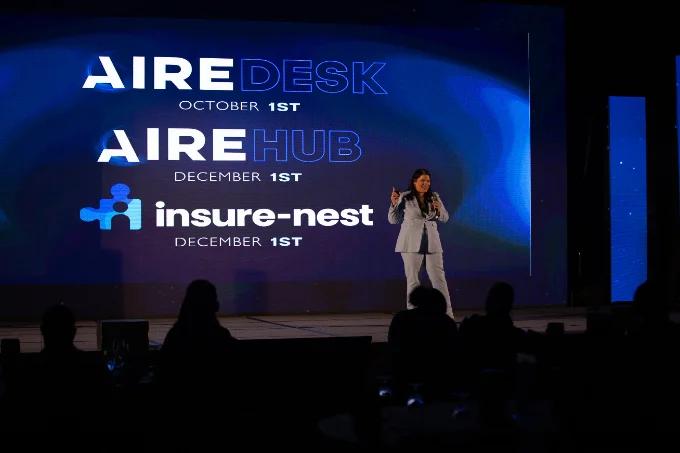
Amanda Diaz presenting a platform rollout to a room of agents

Demoing the lead platform to the room it was built for.

Leadership

“Change doesn't erase the quality of the work you produced.”

Requirements change. Businesses change. Priorities move. The standard of the work doesn't have to.

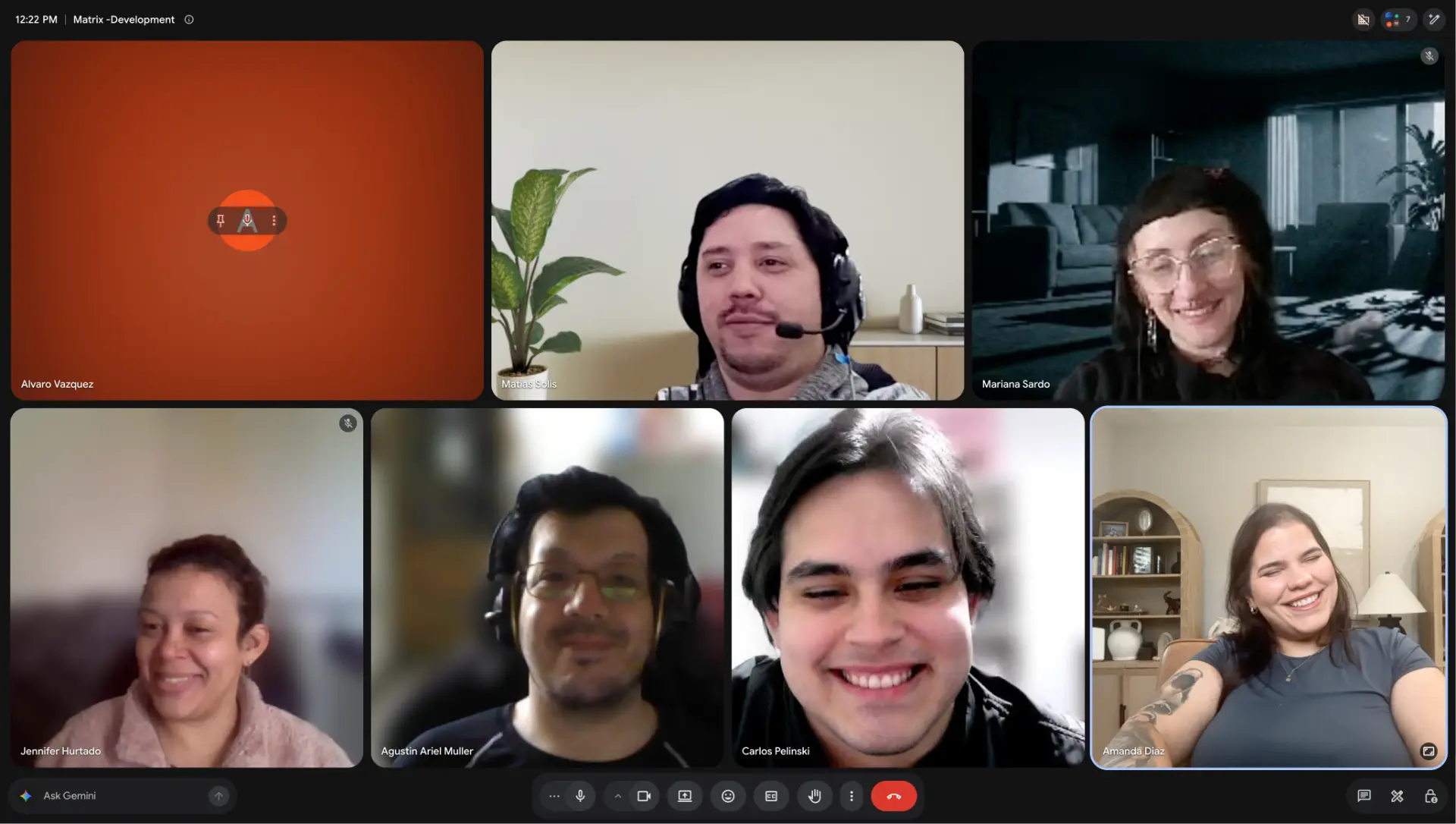
Amanda Diaz with her team
Lead with heart. Operate with accountability.

Trust

People do their best work when they have context, know what's expected, and trust that their leader will tell them the truth.

Respect

Expertise deserves room. The person closest to the work often sees something the rest of the organization doesn't. Leadership means creating space for that expertise to influence the answer.

Accountability

When something under my ownership fails, the question isn't who to blame. It's what happened, what the system allowed, and what needs to change so it doesn't happen again.

My story

I didn't set out to work between departments. The work kept taking me there.

My career has consistently put me in the space between what a business wants to accomplish and what has to happen operationally to make it real.

That has meant leading teams, managing day-to-day operations, redesigning processes, defining business systems, directing product development, working alongside engineers, launching platforms, training users, managing performance, and solving the problems that appear between all of those things.

Over time, I realized the common thread wasn't a department or a job title. It was building structure where complexity had started getting in the way.

That's still the work I enjoy most: understanding how a business actually operates, finding what is limiting it, and bringing together the people, processes, systems, and technology needed to move it forward.

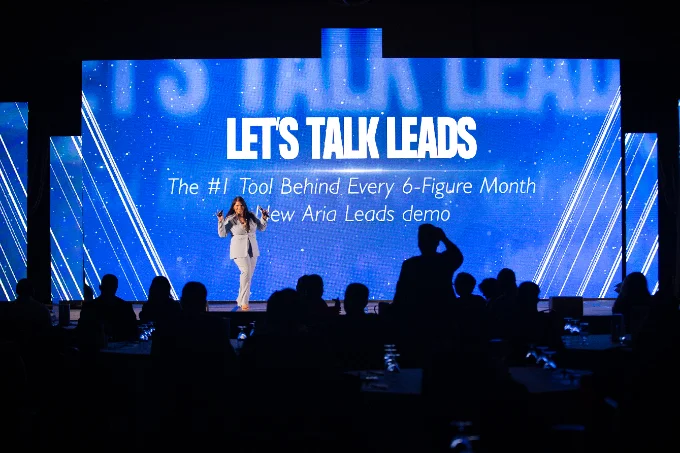
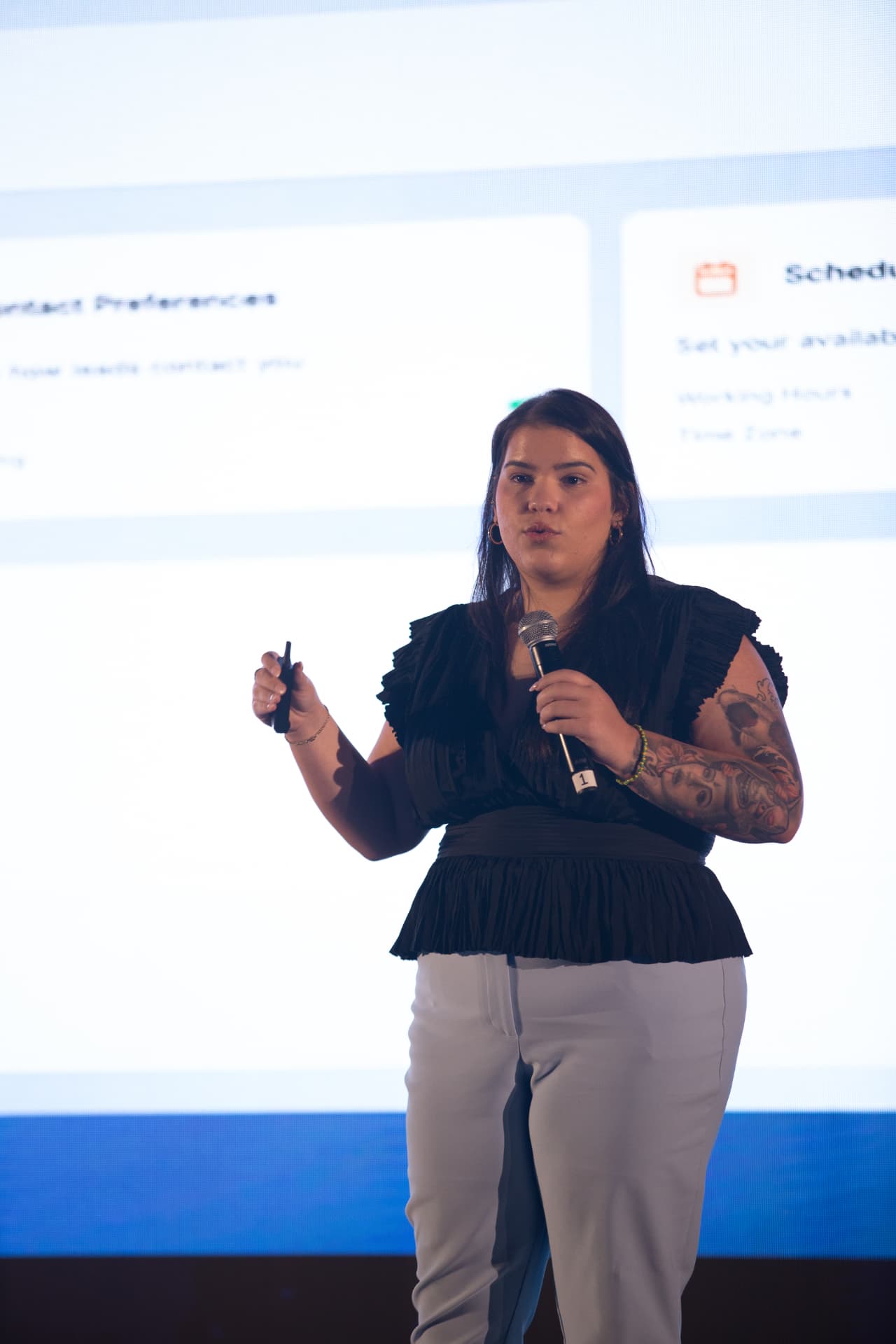
Amanda Diaz presenting a product demo on stage

Let's talk

Where is your operation getting stuck?

Scaling faster than your systems, building from zero, or pieces that exist but don't work together. You don't need to know the solution yet. That's where we start.

Available for fractional engagements and full-time leadership opportunities.